Masvosve: Ant Colony
One becomes many.
A glass terrarium of ants that think for themselves. They forage, tend brood, lay scent, carry loads together and build bridges out of their own bodies.
No ant commands. The colony decides.
Tap the sand to drop a crumb, and watch a trail form.
Field notes
Inside the glass
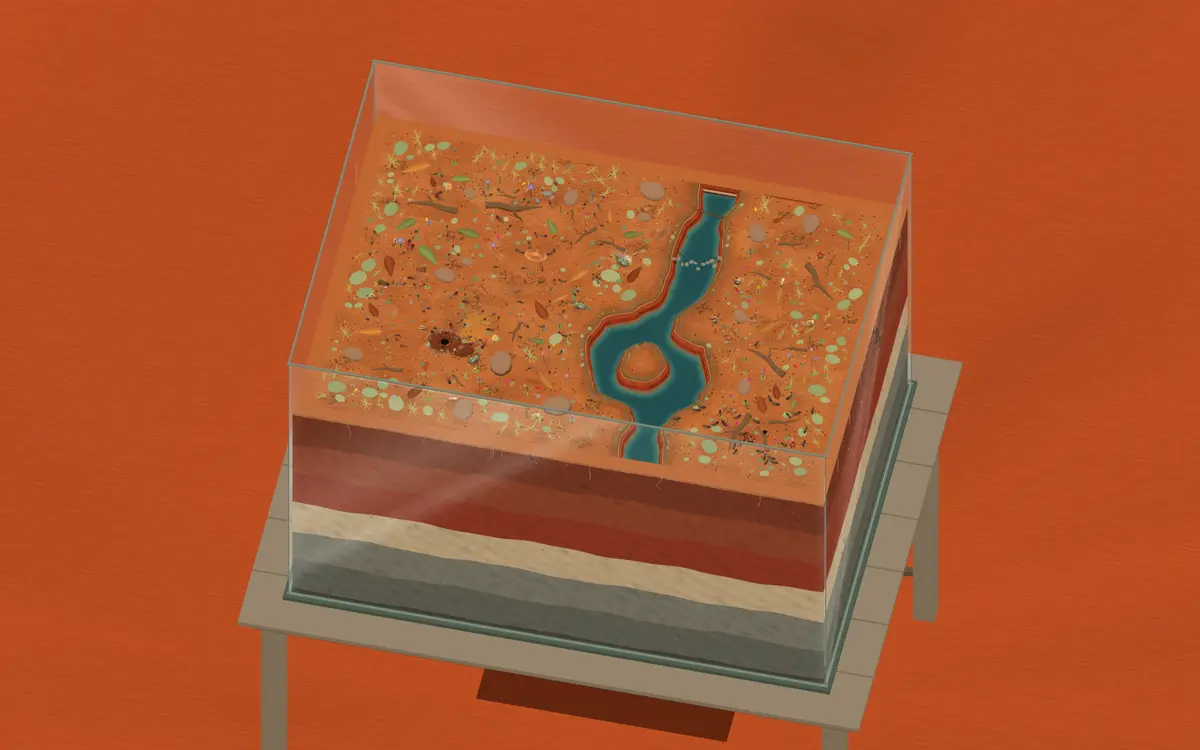
Fig. 1 A glass case you can hold
Orbit, tilt and zoom around a forest floor with an underground cutaway of the nest. Pour in up to 1,000 ants: they drop through the lid, right themselves and get to work. Your colony is saved on your device.
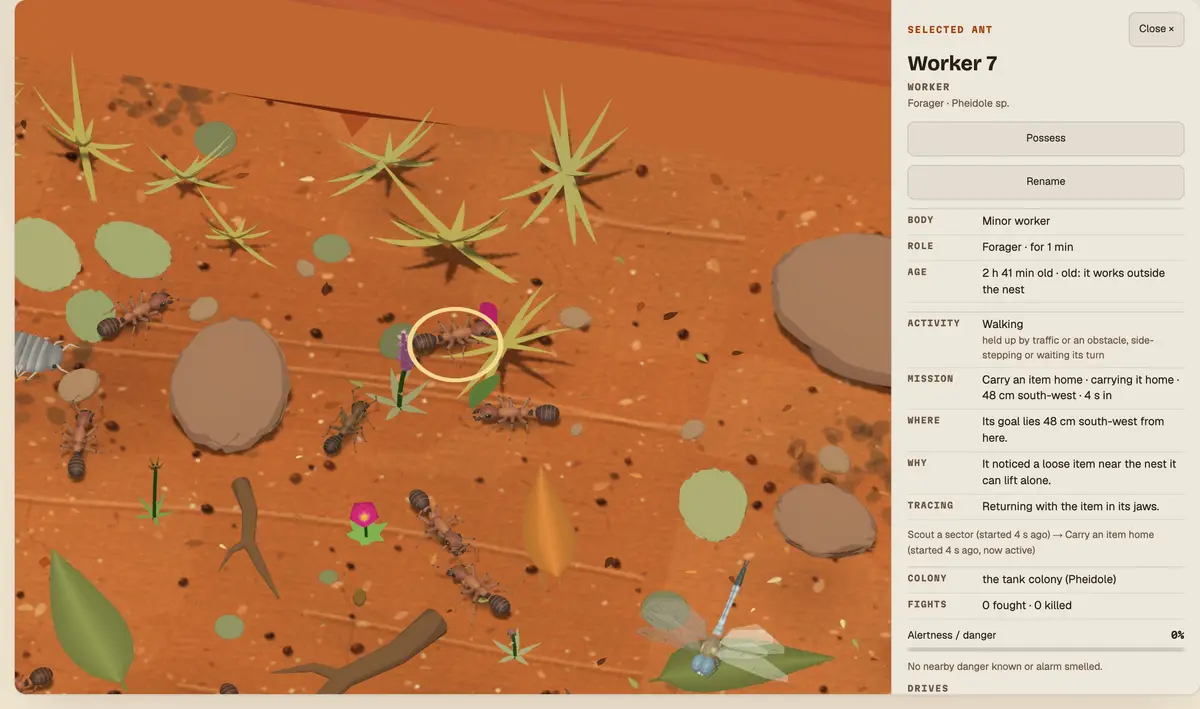
Fig. 2 Every ant is somebody
Tap an ant to follow it and see its name, what it is trying to do and why. Ants act on hunger, memory and what they have smelled or touched, not on a task list.
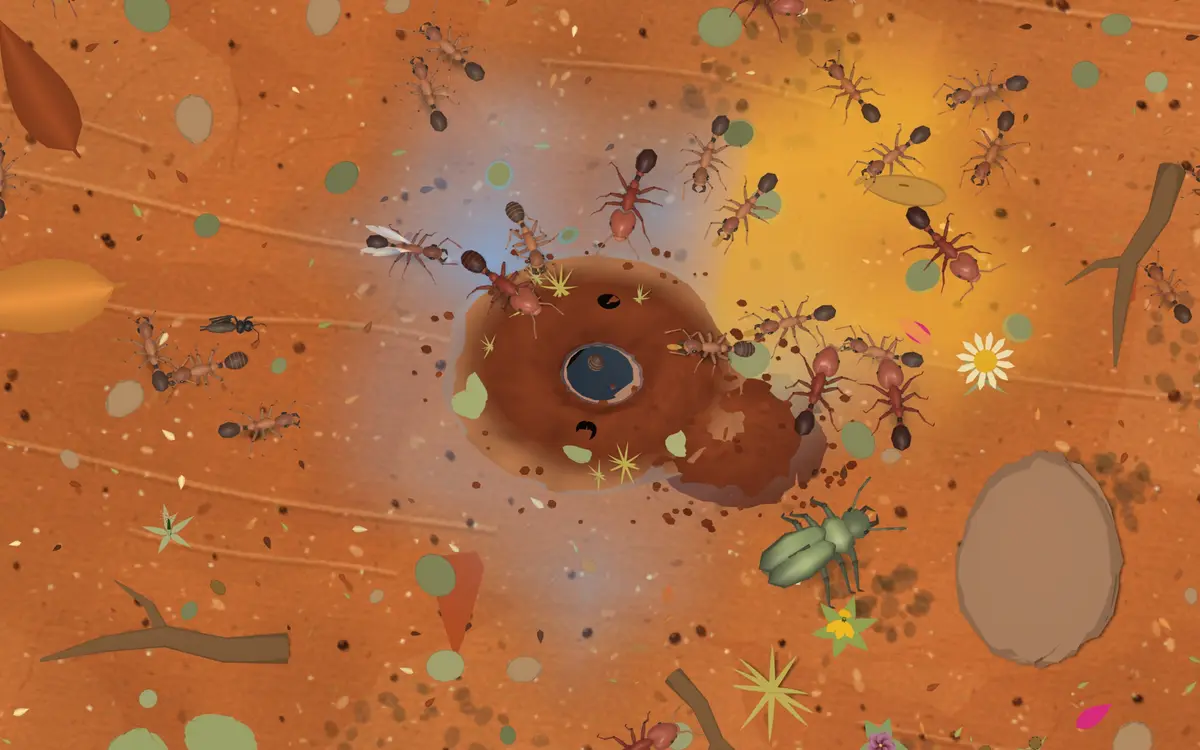
Fig. 3 Scent you can see
The chemical-trails lens shows the scent roads ants lay and follow. The ant-minds lens colours every ant by what it is thinking.
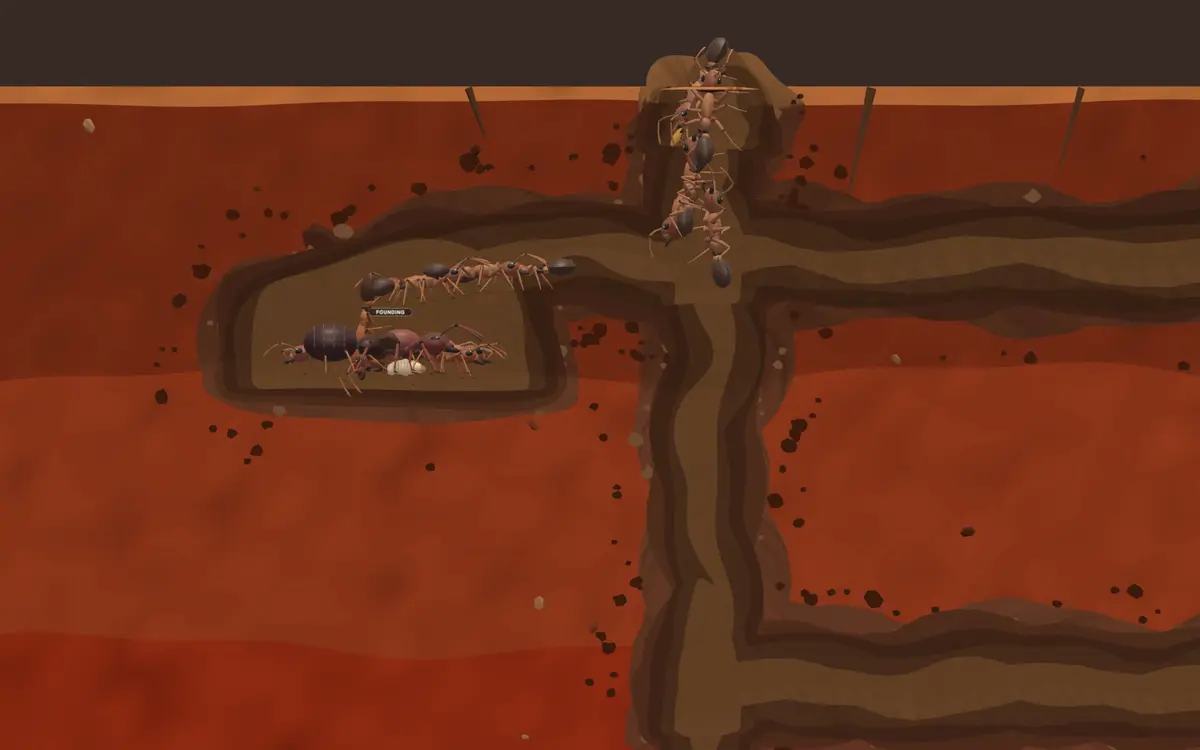
Fig. 4 Work that takes many bodies
Workers lift a heavy load together, each gripping it in its mandibles. Others tend eggs and larvae in the chambers, or link their bodies into a living bridge across a gap.
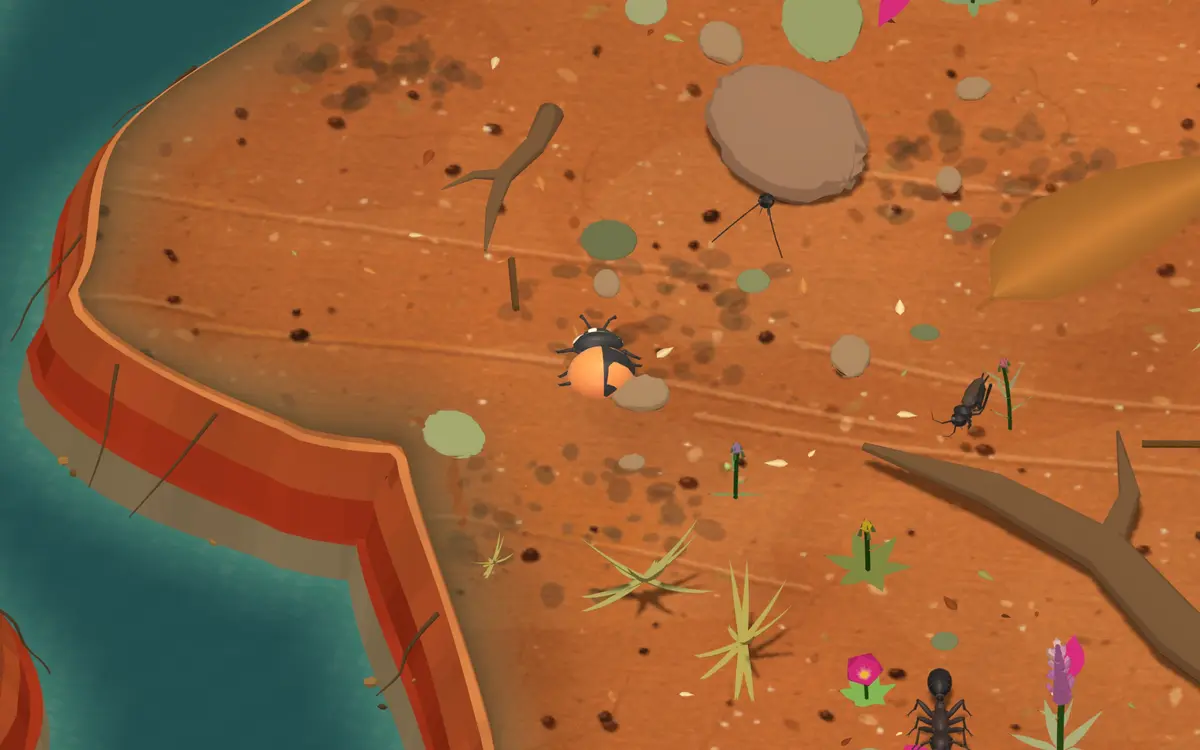
Fig. 5 Neighbours with their own plans
Beetles, centipedes, spiders, crickets, ladybirds, snails, woodlice and dragonflies share the case. Some are food. Some are trouble.
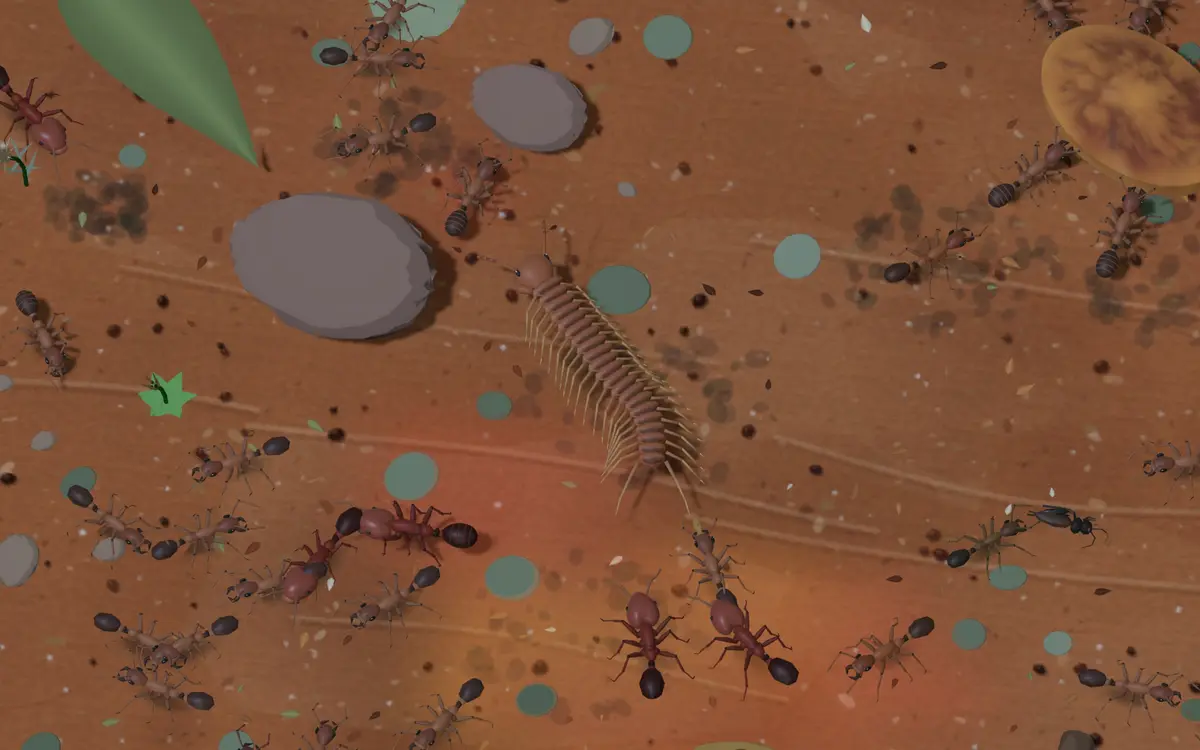
Fig. 6 Day turns to night
A full day passes every twelve minutes. Flowers lean toward the sun, the moon comes up, and the colony keeps its own hours.
Leave it running. Fast-forward from half speed to as fast as your device allows, or close the tab: the colony catches up when you come back and tells you what happened.
Plays anywhere. Phone, tablet or laptop, with touch, mouse or keyboard. No account and no download, and reduced motion is respected.
The science underneath
How a colony thinks
- 01Stigmergy
- Ants talk through the ground. An ant that finds food lays scent on the way home, others follow it and add their own, and good routes get stronger while stale ones fade. Nobody plans the road.
- 02Quorum
- Big changes wait for enough voices. When enough nestmates meet the same signal in a short time, the colony commits: to a trail, to a defence, to a new job.
- 03Local knowledge
- Each ant knows only what it has smelled, touched or picked up from a nestmate it met. What the colony knows is spread across thousands of small, partial memories.
In development
Defend the nest
Creatures will come for the colony, and the entrances ants leave by are the ways attackers get in. The colony will have to notice, agree and respond, without you giving a single order.